Traveling with a drone isn’t as hard as you might think, but you do need to properly prepare. Here are a few tips that will help you be prepared.
CHAPTER 1. Drone Regulations
The U.S. National Aviation Authority (FAA), flying a drone in the United States is legal. However, you must register your drown with the FAA. When traveling domestically in the U.S with your drone, the TSA allows you to travel with it in carry on luggage. You’ve got to check with your airline, they all have different regulations on batteries and drone size. If you have a smaller drone like a Phantom, there are bags designed for carry-on purposes. You just need to make sure that the bag fits in the overhead compartments or underneath your seat — this differs on every plane.
If you have a larger drone like a DJI Inspire 1, Yuneec Typhoon, or Freefly Alta, you’ll definitely want a rolling hard shell case to check the drone. You’ll need to verify with the airline, but the standard regulations limit passengers to only two lithium ion batteries over 100 watt hours (Wh). There is no limit for most batteries under 100 watt hours. New batteries should have the watt hour marked on them. If for some reason they don’t, you can calculate the watt hours by multiplying the battery voltage by the Amp hours (Ah).
CHAPTER 2. Countries That Banned Drones.
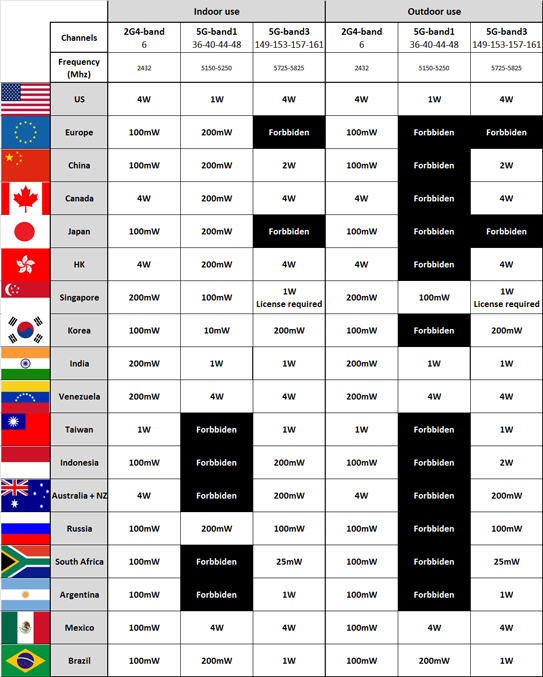
There are some Countries that have banned drones completely, and others that have strict regulations on drones. You’ll want to check the Countries regulations and restrictions on drones. You don’t want to break any laws in the country you are visiting. You’ll want to check the Countries regulations and restrictions on drones. You don’t want to break any laws in the country you are visiting. Generally speaking, the more touristy a place is, the less likely you’ll be able to fly a drone. You might be able to apply for a permit in advance, but often those are only available to professional drone pilots. You’ll need to contact the location, or that country’s civil aviation administration
For example, most of Paris is a big no-fly zone. It’s safe to assume that many well-known tourist attractions, major landmarks or high-density pedestrian zones will likely be off limits. Washington, D.C., is a no-drone zone. In Britain, you’re not allowed to fly within approximately 50 meters (about 164 feet) of any building, person or vehicle, or 150 meters (492 feet) from built-up or crowded areas. Japan has similar restrictions, as do many other countries. There are mix of laws in Europe currently, but one European Union-wide set of rules will be in effect starting July 2020. You’ll need to contact the location, or that country’s civil aviation administration. Iv’e listed a map below, that gives you an idea of restrictions in different countries.
 Seek Adventure